Workforce Immersive Training with Virtual and Augmented Reality
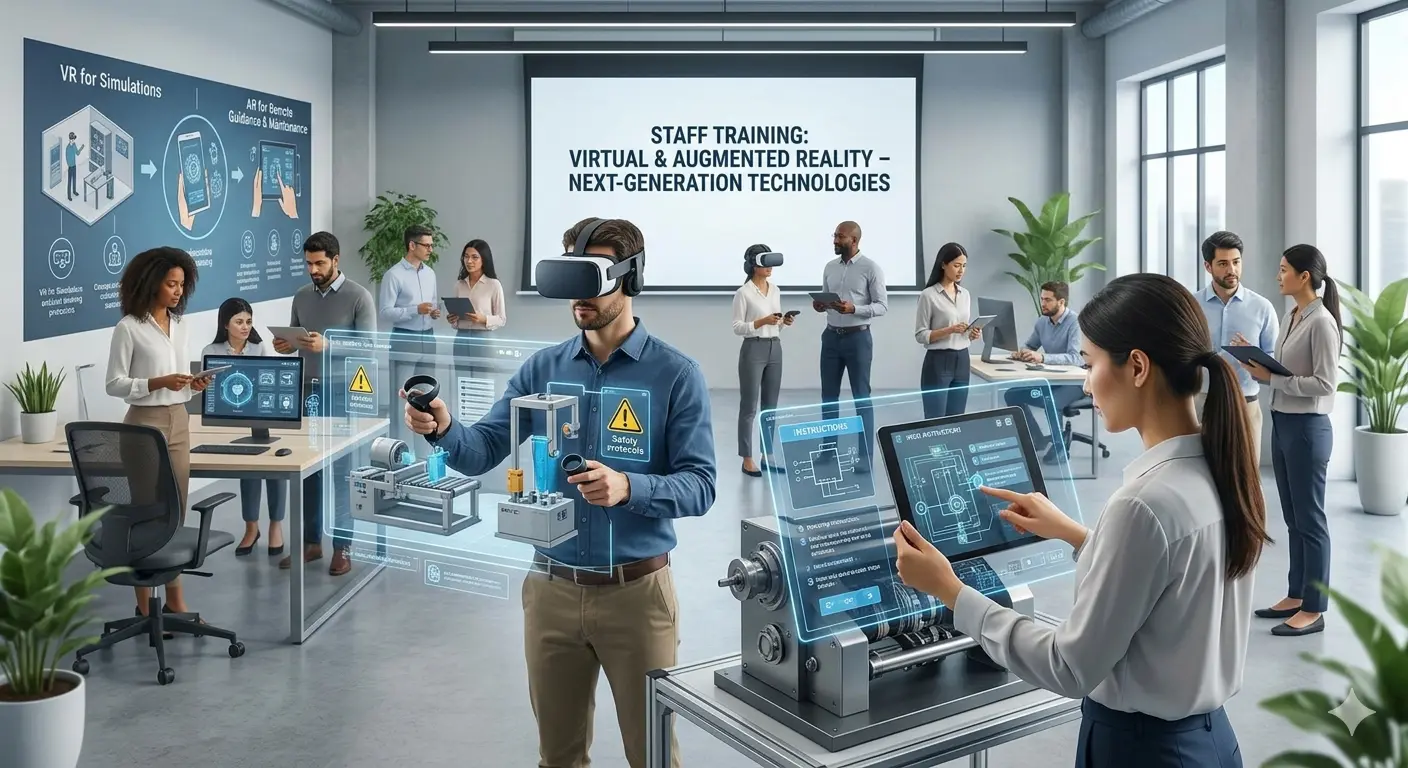
Transform your workforce training into Immersive Training with advanced technologies deployment.
Virtual Reality (VR), Augmented Reality (AR), and Mixed Reality (MR).
Automation will optimize your performance results!
The challenges facing organizations today
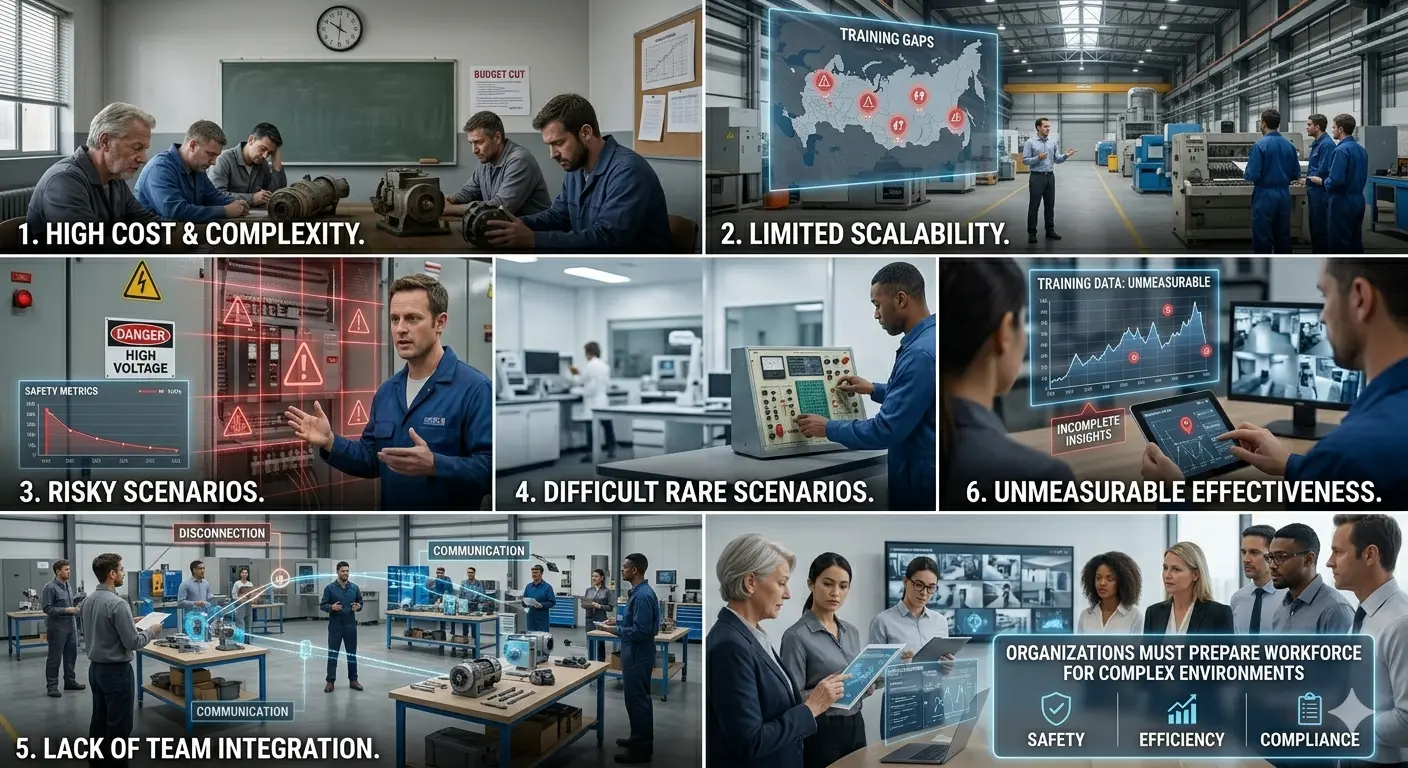
Traditional training methods often have limitations:
High cost of practical training infrastructure
Difficulty simulating dangerous or rare operational scenarios
The loss of experienced personnel leaves a significant gap
Limited ability to scale training
Lack of measurable training performance data
Organizations today are called upon to prepare their workforce for increasingly complex operational environments, while maintaining high levels of security, efficiency, and regulatory compliance.
As operational risks increase and technological advancements accelerate, organizations need more effective and scalable training solutions.
A new generation of training
Virtual Reality (VR), Augmented Reality (AR), and Mixed Reality (MR) technologies are transforming the way organizations train their workforce.
Immersive training allows employees to:
Experience realistic operational scenarios
Practice in hazardous situations in complete safety
Learn through interactive and experiential environments
Repeat complex procedures until they are fully understood
Receive real-time feedback on their performance
This approach shifts training from theoretical instruction to experiential learning.
Virtual Reality (VR)
Virtual Reality (VR) creates fully digital, three-dimensional environments in which trainees can practice in realistic scenarios without risk.
Augmented Reality (AR)
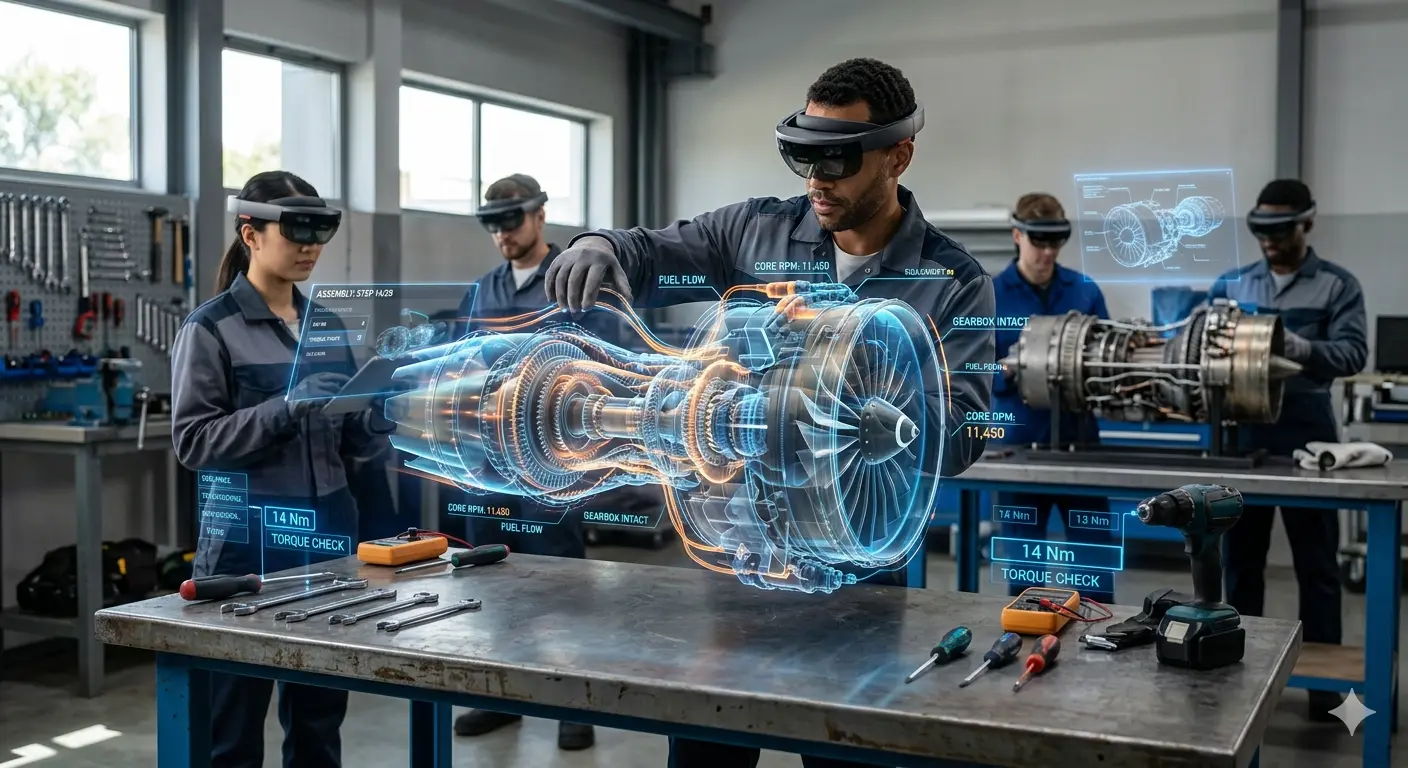
Augmented Reality (AR) enriches the real world with digital information and instructions, facilitating training and supporting employees during actual work tasks.
Mixed Reality (MR)
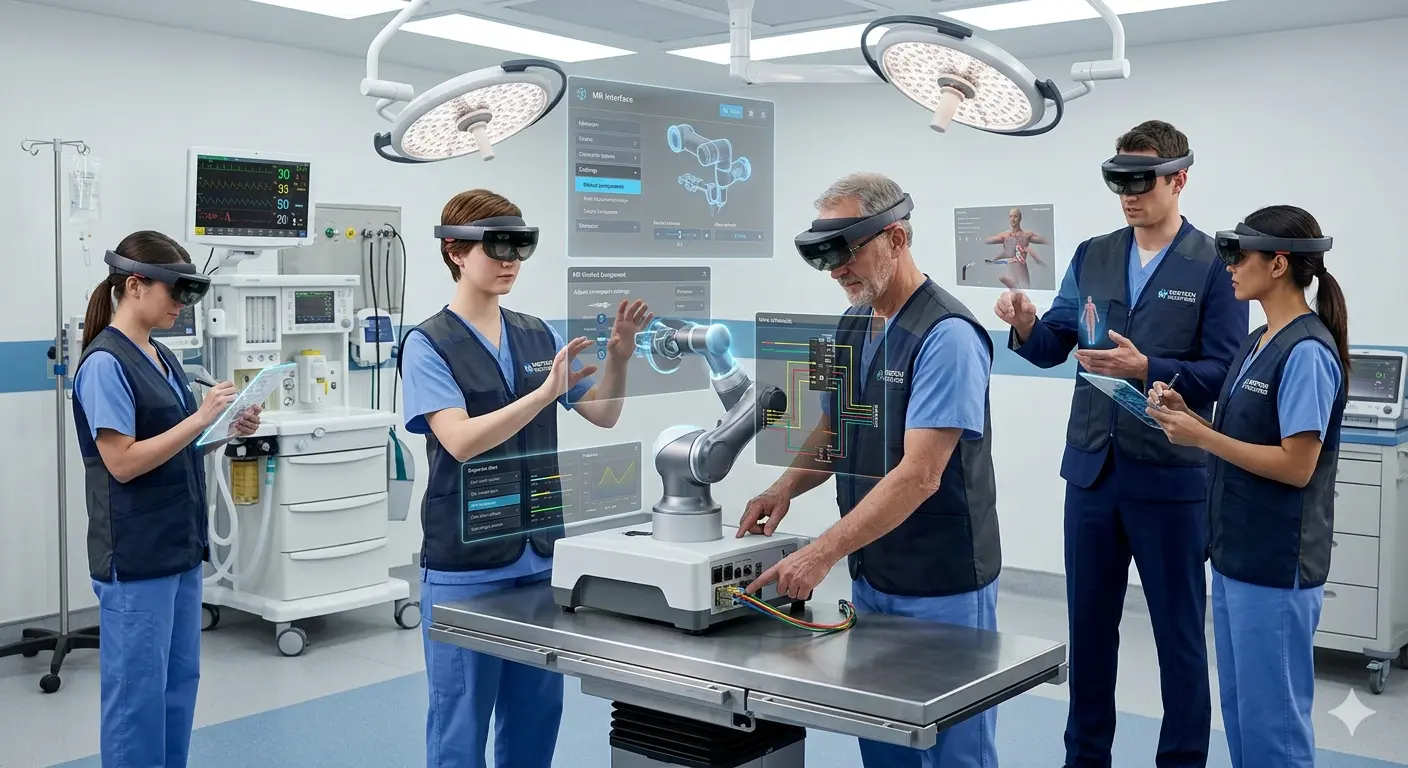
Mixed Reality (MR) combines the two, allowing digital objects to interact with the physical environment in real time.
High-value sectors for immersive staff training
Sectors where personnel manage complex operations, safety procedures, and operational coordination in dynamic environments.
Key sectors
Shipping & maritime transport
Aviation & airport operations
Logistics & supply chain
Typical immersive training scenarios
Operational coordination and navigation
Emergency management
Equipment handling
Safety and regulatory compliance procedures
Immersive simulations allow teams to practice critical scenarios safely and repeatedly, enhancing readiness before real-world operational situations.
Sectors where employees interact with complex machinery, production systems, and industrial environments.
Key sectors
Industrial production & manufacturing
Energy & infrastructure
Oil & natural gas
Typical immersive training scenarios
Equipment operation and maintenance
Safety procedures in hazardous environments
Technical diagnosis and troubleshooting
Training on production lines
Immersive environments allow technicians to develop technical skills without interrupting production or exposing themselves to hazards.
Sectors where human performance directly impacts safety, crisis management, and business continuity.
Key sectors
Health & medical services
Emergency services & public safety
Defense & security
Typical immersive training scenarios
Emergency simulations
Team coordination in crises
Medical procedures and clinical decision-making
Team communication in high-pressure environments
Immersive training allows organizations to simulate rare but critical scenarios, enhancing team readiness and effectiveness.
Sectors and organizations focused on skills development, customer experience, and team leadership.
Key sectors
Retail & customer experience
Tourism & hospitality
Leadership & management training
Typical immersive training scenarios
Customer service simulations
Conflict management and negotiations
Executive decision-making
New employee onboarding
Immersive learning environments create experiential training programs that increase employee engagement and learning effectiveness.
The user experience within a virtual reality environment
Three-dimensional (3D) digital environment
Users move around and interact with objects and tools just as they would in real-world work conditions.
Learning By Doing
They perform procedures, make decisions, and deal with realistic scenarios.
Necessary Preparation
They repeat training scenarios as many times as needed, allowing them to develop skills and confidence before applying the procedures in the actual workplace.
Immersive experience
Allows them to focus on the training scenario without external distractions.
Real-Time Feedback
They immediately understand their mistakes and have the opportunity to improve their performance.
Gathering Useful Training Data
The organization collects data on user performance and behavior to evaluate the effectiveness of the training and continuously improve learning programs.
"Tell me, and I forget· Teach me, and I remember· Involve me, and I learn."
Confucius Ancient Chinese philosopher and teacher
Create your own virtual training environment
A structured approach to adopting
3 pillar framework
1
Identifying opportunities for immersive training
Presentation of virtual reality training environments
Identification of operational training opportunities
Assessment of operational advantages and benefits
2
Readiness for implementation and change management
Assessment of organizational readiness
Implementation roadmap
Integration with existing training systems
Change management and stakeholder engagement
3
Navigating grant programs
Identifying relevant funding opportunities
Assessing grant eligibility
Support in preparing proposals
Value for your organization - operational and training benefits
Safer Training Environments
Teams practice high-risk scenarios in a virtual environment without actual danger.
Job Satisfaction
Staff feel greater satisfaction and security through immersive training, enhancing their loyalty.
Successful Technology Adoption
Consulting support ensures the successful integration of the technology.
Accuracy and Speed of Execution
Human errors are significantly reduced, leading to greater effectiveness and efficiency.
Training Flexibility and Scalability
The program can be implemented across multiple teams and locations simultaneously, wherever they are, whenever needed—quickly and easily.
Employer Reputation
The adoption of advanced technologies enhances the reputation as a good employer.
Faster Skill Development
Immersive learning accelerates skill acquisition.
Training Data
Performance data enables continuous improvement of training.
Opportunities for Reducing Investment Costs
Financing support reduces the financial risk of adoption.
Join us in exploring opportunities to automate your educational system
Discover how immersive training can transform staff training at your organization.
If you’d like to explore the possibilities of immersive technologies in training, we’d be happy to discuss your organization’s needs and potential use cases.
Schedule an exploratory discussion today with experts in applied Virtual Reality (VR), Augmented Reality (AR), and Mixed Reality (MR) technologies.
Express your interest here
Just fill in the details below and we will contact you shortly.
We are always eager for your best service!
We use cookies to provide you a better user experience on this website.Cookie Policy